
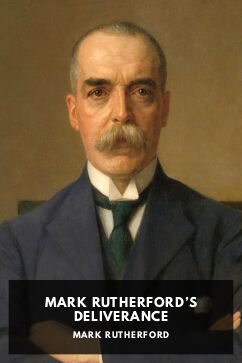
Mark Rutherford’s Deliverance - Mark Rutherford
Let me tell you about Mark Rutherford. Don't let the title fool you—this isn't a swashbuckling escape. It's a sequel to 'The Autobiography of Mark Rutherford,' and it picks up with our narrator in a deep, personal crisis. He's a Dissenting minister, which means he preaches outside the official Church of England. But here's the problem: he doesn't believe his own sermons anymore.
The Story
The book follows Mark as he leaves his ministry, utterly broken and adrift. He moves to London, a city that feels huge and indifferent, and tries to build a new life from scratch. He takes up hack writing—grinding out articles for pennies—and it's a bleak existence. We see him grapple with poverty, loneliness, and a depression so heavy it's almost a physical character. He finds some solace in a few friendships, particularly with a kind bookseller and a fellow writer, but the shadow of his past and his lost faith never fully leaves him. The 'deliverance' of the title isn't a single, dramatic rescue. It's slower and more fragile. It's in the small acts of human kindness, the struggle for honest work, and the hard, daily choice to find meaning when the big, easy answers have fallen away.
Why You Should Read It
This book hit me in a quiet but powerful way. Rutherford's inner world is so honestly laid bare. His doubts aren't philosophical puzzles; they're the raw, aching questions that keep you up at night. What's the point? Why go on? William Hale White (the real author using 'Mark Rutherford' as a pen name) writes about spiritual and emotional exhaustion with a clarity that feels modern. The prose is simple and direct, which makes the emotional weight even heavier. You're not just reading about a sad man from the 1880s; you're feeling the universal human struggle against despair. It's a book that finds profound drama in an ordinary life.
Final Verdict
This is for the thoughtful reader. It's perfect if you love character-driven stories that explore the big questions of faith, work, and belonging. If you're a fan of George Eliot's psychological depth or Thomas Hardy's sense of fate, but want something more intimate and less plot-heavy, you'll connect with this. It's not a breezy read—it requires some patience—but it rewards you with incredible emotional honesty. Think of it as a long, deep conversation with a wise, weary friend who has been through the fire and come out the other side, scarred but still standing.
The copyright for this book has expired, making it public property. It is now common property for all to enjoy.
Matthew Gonzalez
1 year agoThe citations provided are a goldmine for further academic study.
Matthew Martin
9 months agoI appreciate how this edition approaches the core problem, the emphasis on ethics and sustainability within the topic is commendable. A refreshing and intellectually stimulating read.
Dorothy Lee
1 year agoI didn't expect much, but it challenges the reader's perspective in an intellectual way. Truly inspiring.
Kevin Scott
1 year agoEssential reading for students of this field.







Thomas Thomas
6 months agoHaving explored several resources on this, I find that the insights into future trends are particularly thought-provoking. It definitely lives up to the reputation of the publisher.