R
rodney eason
Guest
- Thread Author
- #1
It was around 15 years ago when I first heard about the genus Epimedium. This was while we lived in North Carolina and I worked at Plant Delights Nursery. Here was an evergreen groundcover that flowered, could grow in the shade, and was pretty tough. Since that time, whenever I hear anyone talk about Epimedium they usually refer to it as an underrated and underused perennial. Well, that has been 15 years so it is high time that more of us gardeners need to get on with it and plant more Epimedium.
And, I forgot to mention that deer do not like to eat them.

Epimedium image from plantsnouveau.com
At Coastal Maine Botanical Gardens, we are working on developing a collection of Epimedium or “fairy wings” (as they are commonly called) in the gardens. Of all the plants in our collection, one that has really caught my attention is Epimedium wushanense.
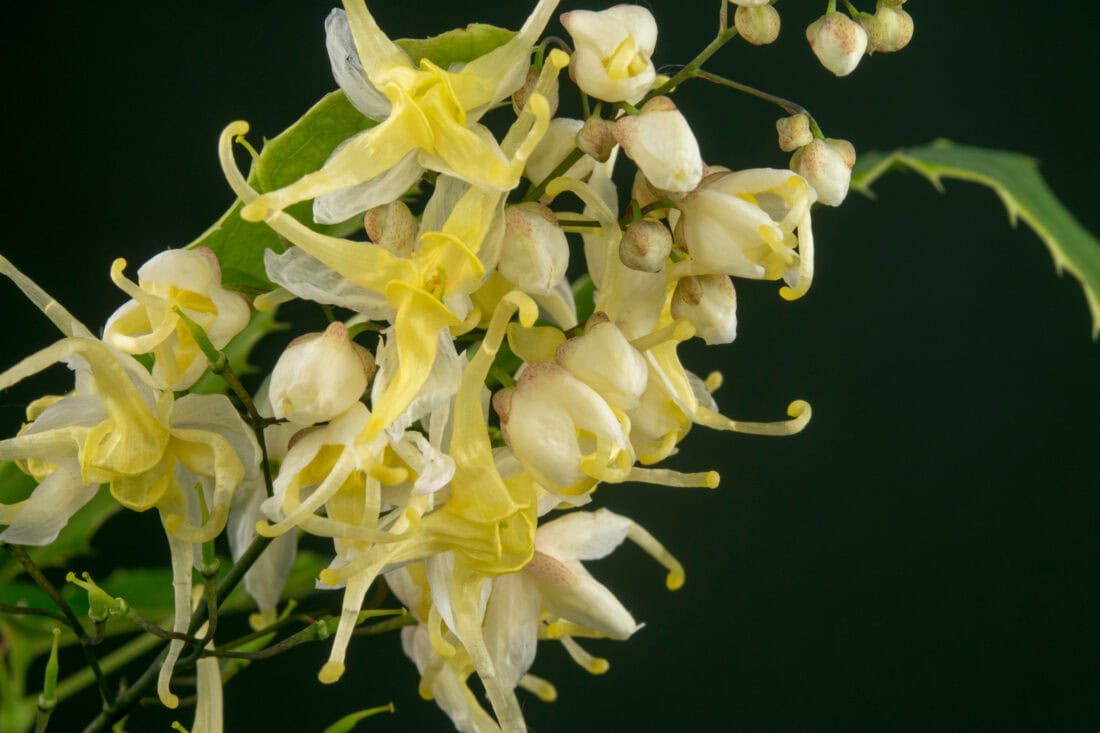
The beautiful white flowers of Epimedium wushanense image by Wiert.
A friend posted a picture of it on Facebook, and it reminded me to take a closer look at ours. Epimedium wushanense stands out by having spiny-looking leaves. The leaves are also much larger than most species, up to 10″ long, with irregular, red tints to the leaves as well.
All Epimedium have unique flowers and E. wushanense differs from other Epimedium by having smaller flowers with more on each spike.
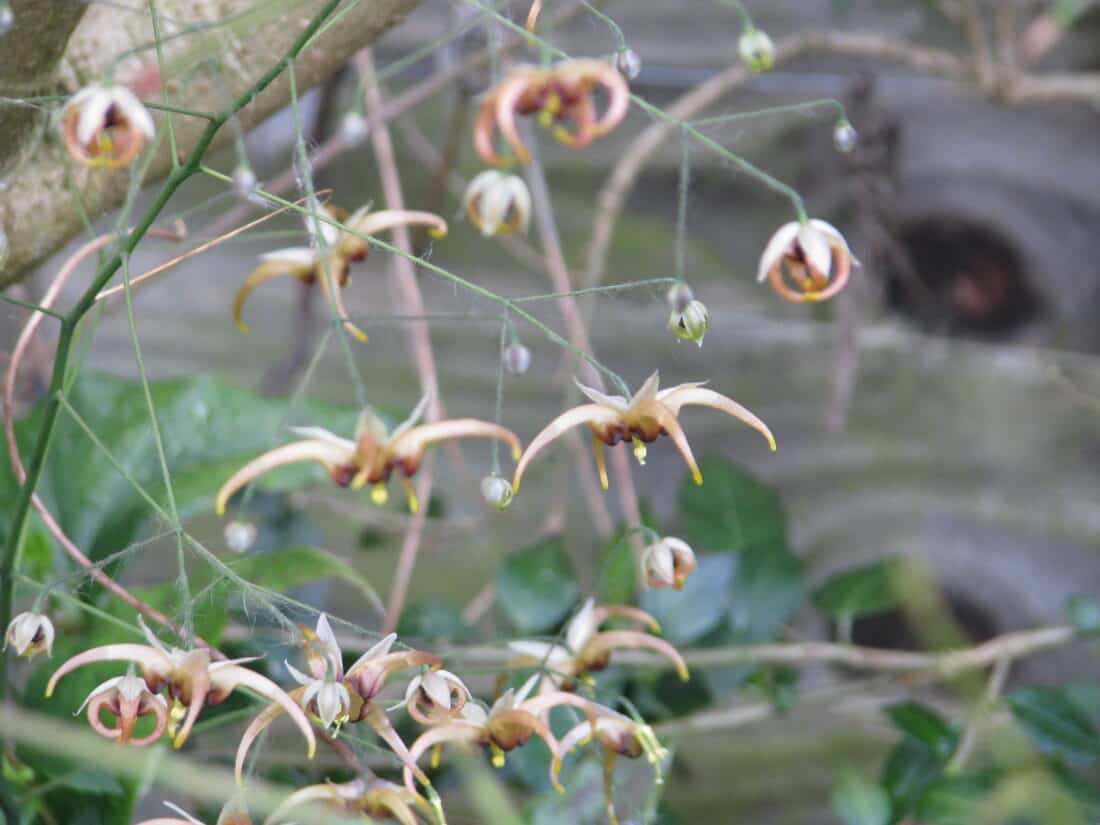
Epimedium fairy wing flowers by peganum
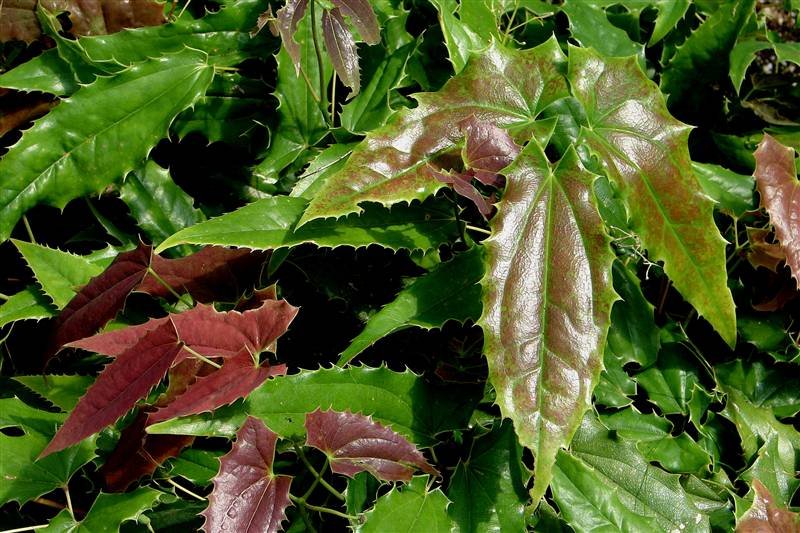
The characteristic spiny leaves of Epimedium wushanense in the early spring. image by collectorsnursery.com
Hardy to USDA zone 5 or 6 (it is so uncommon that we are not sure yet), Epimedium wushanense is one plant to add to that spot where you struggle to grow most everything else: shade, dry, with deer, etc.
It will prefer a slightly well-drained soil with adequate moisture until established. Once established, it will form a nice clump. It will lose its leaves during the winter in a colder climate but is beautiful when emerging in the spring.
Epimedium wushanense was introduced by the former owner of Garden Vision Nursery, Darrell Probst. This species comes from the Wushan Mountains of the Sichuan province of China.

Image by Rodney Eason
Epimedium Wushanense in Summer
Epimedium wushanense, also known as Wushan barrenwort, is a flowering plant native to China. It is prized for its attractive heart-shaped leaves and delicate orchid-like flowers. This perennial herb is often used in traditional Chinese medicine for its purported aphrodisiac and medicinal properties.
A soft clump of epimedium in the garden will spread over time
The characteristic spiny leaves of Epimedium wushanense.

image by Daderot
As you are plant shopping this spring, be sure to add an Epimedium or two or three to your garden. And if you come across E. wushanense, pick one up and give it a try. You are sure to impress your plant geek friends this summer!
–Rodney
Notes: Another popular variety of Epimedium wushanense is the newer introduction called Epimedium wushanense ‘Sandy claws’. Sandy Claws forms a larger plant, also with long, lance-shaped leaves and spiny margins. Also, the emerging foliage has a more dramatic maroon coloring that is hard to find in a shade garden. In the summer the foliage will mellow to green.
The post Why Epimedium wushanense May Be the Ultimate Dry Shade Plant appeared first on PITH + VIGOR by Rochelle Greayer.
And, I forgot to mention that deer do not like to eat them.
Epimedium image from plantsnouveau.com
At Coastal Maine Botanical Gardens, we are working on developing a collection of Epimedium or “fairy wings” (as they are commonly called) in the gardens. Of all the plants in our collection, one that has really caught my attention is Epimedium wushanense.
The beautiful white flowers of Epimedium wushanense image by Wiert.
A friend posted a picture of it on Facebook, and it reminded me to take a closer look at ours. Epimedium wushanense stands out by having spiny-looking leaves. The leaves are also much larger than most species, up to 10″ long, with irregular, red tints to the leaves as well.
All Epimedium have unique flowers and E. wushanense differs from other Epimedium by having smaller flowers with more on each spike.
Epimedium fairy wing flowers by peganum
The characteristic spiny leaves of Epimedium wushanense in the early spring. image by collectorsnursery.com
Epimedium Wushanense – problem solver for dry shade.
Hardy to USDA zone 5 or 6 (it is so uncommon that we are not sure yet), Epimedium wushanense is one plant to add to that spot where you struggle to grow most everything else: shade, dry, with deer, etc.
It will prefer a slightly well-drained soil with adequate moisture until established. Once established, it will form a nice clump. It will lose its leaves during the winter in a colder climate but is beautiful when emerging in the spring.
Epimedium wushanense was introduced by the former owner of Garden Vision Nursery, Darrell Probst. This species comes from the Wushan Mountains of the Sichuan province of China.
Image by Rodney Eason
Epimedium Wushanense in Summer
Epimedium wushanense, also known as Wushan barrenwort, is a flowering plant native to China. It is prized for its attractive heart-shaped leaves and delicate orchid-like flowers. This perennial herb is often used in traditional Chinese medicine for its purported aphrodisiac and medicinal properties.
A soft clump of epimedium in the garden will spread over time
The characteristic spiny leaves of Epimedium wushanense.
image by Daderot
As you are plant shopping this spring, be sure to add an Epimedium or two or three to your garden. And if you come across E. wushanense, pick one up and give it a try. You are sure to impress your plant geek friends this summer!
–Rodney
Notes: Another popular variety of Epimedium wushanense is the newer introduction called Epimedium wushanense ‘Sandy claws’. Sandy Claws forms a larger plant, also with long, lance-shaped leaves and spiny margins. Also, the emerging foliage has a more dramatic maroon coloring that is hard to find in a shade garden. In the summer the foliage will mellow to green.
More Epimedium posts and other fairy-inspired gardens and shade plants.
- Planting and Growing Epimedium a.k.a. Horny Goat Weed in your garden
- Garden Gallery: Claude and Corinne’s Hotel Droog Fairy Tail Garden
- The Best Ground Covers to Replace Expensive Garden Mulch
Exploring Turtlehead plants – Chelone obliqua and cultivars
Why Botanical Enthusiasts are Switching to Native Plants Like Asplenium scolopendrium
The post Why Epimedium wushanense May Be the Ultimate Dry Shade Plant appeared first on PITH + VIGOR by Rochelle Greayer.