
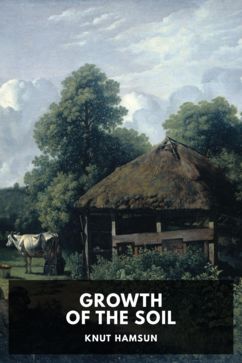
Growth of the Soil - Knut Hamsun
Let's talk about one of the quietest, yet most powerful, books I've ever read. Knut Hamsun won the Nobel Prize for this in 1920, and after reading it, I get why.
The Story
We meet Isak, a strong, silent man who arrives in a wild, uninhabited valley in Norway. With just his hands and simple tools, he starts the immense task of creating a farm: clearing stones, cutting timber, building a sod hut. He's joined by Inger, a woman with a hidden past who becomes his wife. Together, they face the endless cycle of work—sowing, harvesting, birthing animals, raising children. Their life is hard but full of a deep, wordless satisfaction. As years pass, their settlement grows. A road is built, bringing new neighbors and the first whispers of modern society—with its laws, commerce, and different values. The story follows Isak's family through generations, watching how this hard-won piece of earth changes, and how they change with it.
Why You Should Read It
This book moved me in a way few others have. It's not about dramatic dialogue or twists. It's about the dignity of work and the profound connection between people and the land that feeds them. Hamsun makes you feel the ache in Isak's muscles and his quiet joy at a full barn. The prose is simple and rhythmic, almost like the seasons it describes. It made me think about my own life—about what 'progress' really means and what kind of roots we're planting today. Isak isn't a chatty hero, but his steadfastness becomes incredibly compelling. You start to see the world through his eyes, where a well-built fence is a major victory.
Final Verdict
This is a book for anyone feeling overwhelmed by the noise and speed of modern life. It's for readers who love character-driven stories and don't mind a narrative that unfolds with the patience of a growing crop. If you enjoyed the grounded feeling of books like My Ántonia or the meditative pace of Stoner, you'll find a kindred spirit here. It's a masterpiece of atmosphere and a timeless reminder of where we all, ultimately, come from.
The copyright for this book has expired, making it public property. Knowledge should be free and accessible.
Robert Lee
7 months agoGreat digital experience compared to other versions.
Donna Lee
10 months agoFive stars!
James Garcia
1 year agoLoved it.
Paul Martin
1 year agoI was skeptical at first, but it provides a comprehensive overview perfect for everyone. Absolutely essential reading.


Richard Smith
1 year agoGiven the current trends in this field, the author manages to bridge the gap between theory and practice effectively. Definitely a five-star contribution to the field.